Leftovers rarely arrive as a neat recipe kit. You may have half a pepper, cooked rice, a spoonful of sauce, and one vegetable that needs attention. The answer is to choose a structure before choosing a dish.
Key takeaways
- Use the most time-sensitive ingredient first.
- Choose a flexible format.
- Buy one connector ingredient, not a new recipe haul.
- Label cooked food with a stored date.
Choose one anchor
Pick the ingredient that is most perishable, most plentiful, or hardest to replace. That anchor determines the cooking method. A cooked grain can become a bowl or fried rice; vegetables can become a roast, soup, filling, or sauce depending on what else is available.
Do not force every leftover into one meal. Saving one ingredient for tomorrow is often better than creating an enormous dish nobody wants.
Transform the meal instead of repeating it
If yesterday’s food is already cooked, change the format: add it to a wrap, fold it into eggs, use it as a topping, or combine it with a fresh base. Keep the flavor profile in mind so the transformation feels intentional.
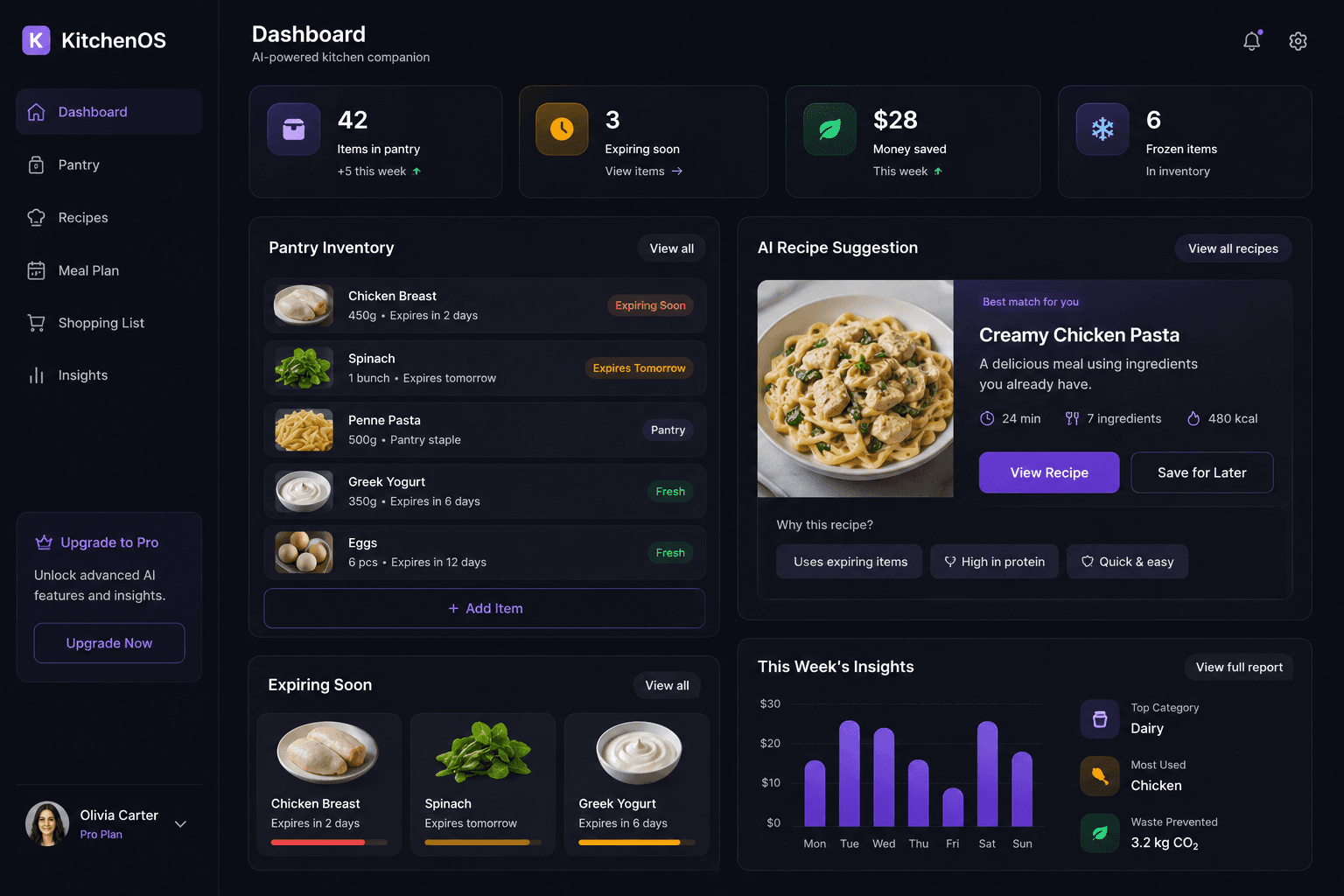
An ingredient-first recipe matcher can help by showing which built-in recipes are closest to the foods you have and what is missing.
Use a “missing item” deliberately
One small purchase can unlock several leftovers, but avoid buying a full basket to rescue one ingredient. Choose the missing item that works across two meals—such as tortillas, eggs, broth, or a grain—if it fits your household and the recipe.
Before using anything, check labels, storage time, and local guidance for cooked foods.
Make the next leftover easier
Store leftovers in portions that match how you eat. Label the container and put it where it is visible. When you remove it from the inventory, the next recipe match becomes more accurate.
- Use the most time-sensitive ingredient first.
- Choose a flexible format.
- Buy one connector ingredient, not a new recipe haul.
- Label cooked food with a stored date.
- Keep allergy and safety checks manual.
What are the limitations and exceptions?
This guide cannot inspect a specific food, package, storage temperature, household need, or medical context. Check labels and current local guidance, and treat FridgeFox scans and recipe matches as editable suggestions rather than safety, allergy, nutrition, or freshness decisions.
Sources and further reading
Food-storage and safety guidance changes by country and context. Use these authoritative sources for the decision in front of you.
See the FridgeFox testing methodology and corrections process for how product and source claims are reviewed.
A practical next step