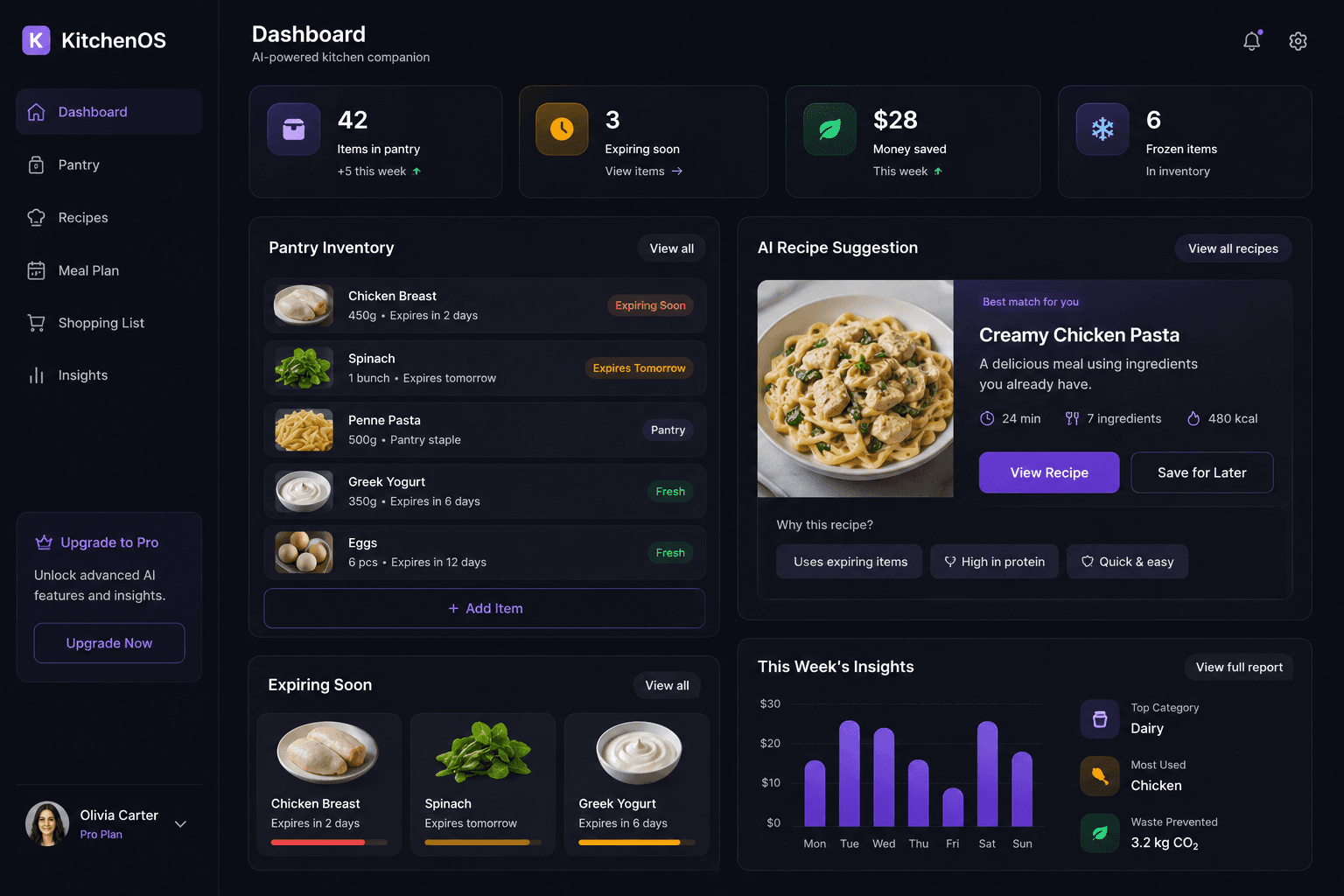
Planning from a blank recipe list often produces an impressive shopping cart. Planning from the pantry starts with constraints, which can make the week cheaper, simpler, and easier to adjust when plans change.
Key takeaways
- Anchor the week to food already open.
- Use meal formats that accept substitutions.
- Buy connector ingredients with more than one job.
- Leave room for a schedule change.
Make a short “use first” list
Choose three to five ingredients that are open, perishable, or tied to a meal that did not happen. Do not list every staple. The list is a planning prompt, not a warehouse report.
If the ingredients are unclear, scan one shelf and review the result. A corrected inventory gives the plan a better starting point than memory alone.
Assign formats before recipes
Give each anchor a flexible role: pasta, soup, tray bake, bowl, stir-fry, wrap, or breakfast-for-dinner. This lets you use substitutions and prevents the plan from collapsing when one ingredient is unavailable.
Then choose one recipe or method for each format. Keep at least one meal intentionally simple for the night when the schedule changes.
Shop for connectors
The best missing item is one that unlocks several meals. A single grain, tortilla, egg, stock, or fresh herb may connect what you own in more than one direction—but only buy it if the household will use it.
FridgeFox shows missing ingredients alongside recipe matches so you can see the cost of a decision before committing to it.
Design for change
Keep one meal movable, one meal freezable if appropriate, and one leftover transformation in the plan. Remove ingredients when they are used so the next week starts with a truthful inventory.
- Anchor the week to food already open.
- Use meal formats that accept substitutions.
- Buy connector ingredients with more than one job.
- Leave room for a schedule change.
- Plan the leftover before it becomes a forgotten container.
What are the limitations and exceptions?
This guide cannot inspect a specific food, package, storage temperature, household need, or medical context. Check labels and current local guidance, and treat FridgeFox scans and recipe matches as editable suggestions rather than safety, allergy, nutrition, or freshness decisions.
Sources and further reading
Food-storage and safety guidance changes by country and context. Use these authoritative sources for the decision in front of you.
See the FridgeFox testing methodology and corrections process for how product and source claims are reviewed.
A practical next step