A fridge list is useful when it answers a question faster than opening every drawer. It becomes frustrating when it asks you to maintain a second version of the kitchen in perfect detail. The practical system is deliberately selective.
Key takeaways
- Capture one zone at a time.
- Use consistent item names.
- Add dates selectively.
- Reset before shopping.
Start with zones, not a complete census
Divide the fridge into broad zones such as top shelf, drawers, door, freezer, and leftovers. Photograph or list one zone at a time. A short record of the foods that shape meals is more useful than a long list of condiments nobody forgets.
If you share a kitchen, choose names everyone will recognize. “Opened tomato sauce” is more useful than a brand code if the question is what should be used tonight.
Record the four details that matter
For most items, the name and category are enough. Add a quantity when it affects a recipe or shopping decision. Add a storage location when several people use the kitchen. Add an expiry or opened date when the timing needs attention.
Leave the field blank when it does not help. Optional data keeps the system quick enough to maintain after a late shop.
Choose update moments you already have
The best update trigger is an existing habit: unpacking groceries, opening a package, putting away leftovers, or starting a meal. A phone camera can reduce typing for the first pass, while manual edits keep the list accurate.
Do a short reset before shopping. Remove what is gone, move what changed location, and identify ingredients that can become the first meal of the week.
Make the list earn its place
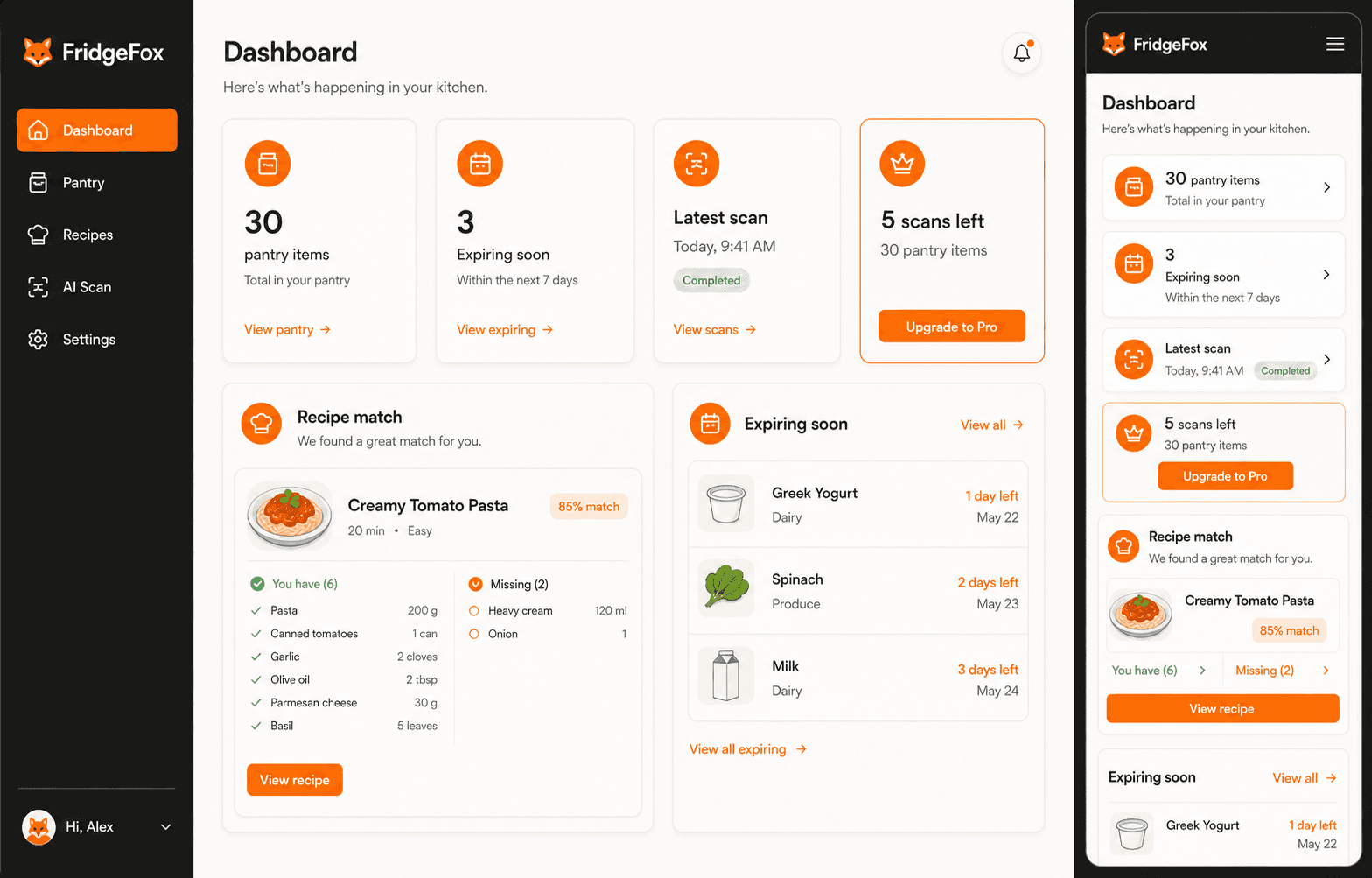
Use the inventory to make one decision: what to cook, what to buy, or what needs using. If it does not help with one of those decisions, simplify the record. FridgeFox combines reviewed photo imports with a pantry list and recipe matching so the inventory leads to an action instead of becoming a static catalog.
- Capture one zone at a time.
- Use consistent item names.
- Add dates selectively.
- Reset before shopping.
- Delete used items immediately when practical.
What are the limitations and exceptions?
This guide cannot inspect a specific food, package, storage temperature, household need, or medical context. Check labels and current local guidance, and treat FridgeFox scans and recipe matches as editable suggestions rather than safety, allergy, nutrition, or freshness decisions.
Sources and further reading
Food-storage and safety guidance changes by country and context. Use these authoritative sources for the decision in front of you.
See the FridgeFox testing methodology and corrections process for how product and source claims are reviewed.
A practical next step